
Masterbatch & Compound Products
Five masterbatch types, engineered for dispersion.
Five product families built on co-rotating twin-screw compounding, virgin carrier resins and laboratory release testing. Each family has a representative grade with a published technical data sheet.
Product Families
Choose a family.
Every family can be tuned to your carrier, let-down ratio and end use. Start from the representative grade and our lab adapts from there, or choose masterbatch by industry.
 01RAL / Pantone
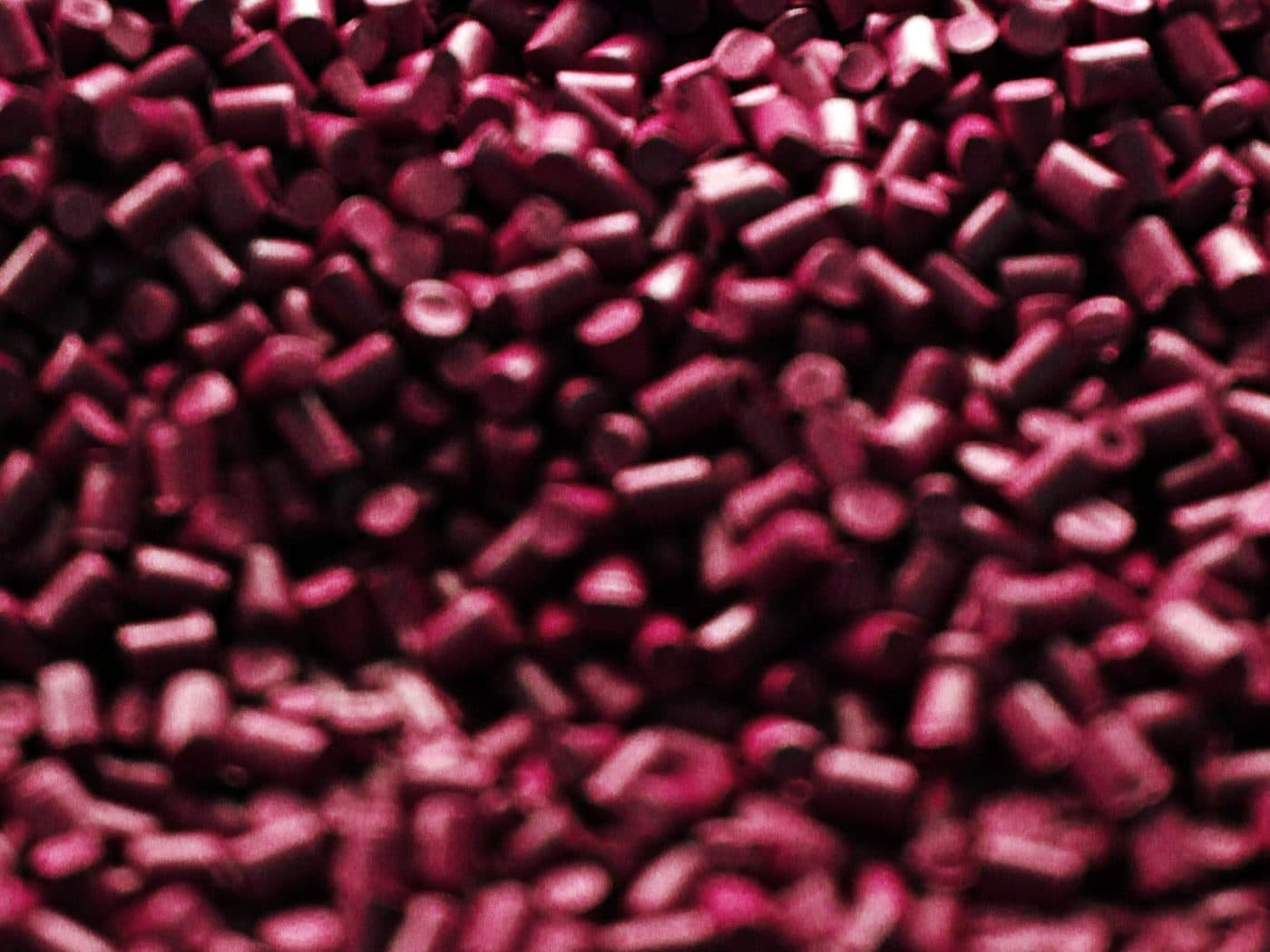
Color Masterbatches
Custom matching to RAL, Pantone or your part, across polyolefin and engineering grades.
Explore range 02Up to 70% rutile
White Masterbatches
High-loading rutile TiO₂ for opacity and whiteness, with anti-lacing film and injection grades.
Explore range 03Agri & Pipe
Black Masterbatches
Agri-grade UV protection and high jetness for extrusion, mulch film and irrigation pipe.
Explore range 04PPA / UV / Slip
Additive Masterbatches
PPA, UV stabilizers, slip, anti-block and antioxidants for cleaner, faster processing.
Explore range 05CaCO₃ / Talc
Calcium & Filler Compounds
Coated CaCO₃ and talc modifiers that lower formulation cost while keeping tensile properties.
Explore range- Talk to our lab
Not listed?
Custom formulations
Combination packs, engineering-polymer carriers and special effects are developed to brief. Tell us the problem on your line.
TDS Matrix
Representative grades at a glance.
The headline parameters converters ask for first. Full property tables, test methods and let-down ratios are on each grade page and TDS. See how masterbatch is made at our Rajkot plant and how the lab tests it.
- MB-CLR-CUSTOM
(Custom RAL / Pantone)
- Pigment System Organic / Inorganic
- Delta-E Tolerance < 0.5
- Heat Stability 240°C – 300°C
- Light Fastness Blue Wool 7 – 8
- Carrier Universal / PE / PP
- MB-W70-PE
(70% Rutile White)
- Active TiO₂ 70%
- Specific Gravity 2.05
- MFI 12.0 g/10 min
- FPV < 0.8 bar/g
- Moisture < 0.12%
- Food Contact FDA 21 CFR 177.1520
- MB-BLK40-AG
(40% Agri & Pipe Grade)
- Carbon Black 40%
- Particle Size 20 nm
- Dispersion ≤ 2 (ISO 18553)
- UV Stability 5+ years
- Standards IS 12786 / ISO 4427
- MB-ADD-SAB
(Slip & Anti-Block Pack)
- Actives Erucamide / Natural Silica
- Film COF < 0.20
- Haze Impact < 2%
- Behaviour Non-blooming
- Carrier Virgin LLDPE
- CP-CA80-PE
(80% Calcium Compound)
- CaCO₃ Content 80%
- Particle Size (D50) 1.5 μm
- Coating Stearic acid
- Whiteness ≥ 95.0
- Benefit Raw material cost reduction
FAQ
Masterbatch basics, answered.
What is masterbatch?
Masterbatch (also written master batch) is a concentrated mixture of pigments, fillers or additives dispersed in a carrier polymer and cut into pellets. Converters blend a small percentage into natural resin during extrusion or moulding to color the product or change how it processes, instead of handling loose powders.
What types of masterbatch are there?
Five main types, all made by AdCol: color masterbatch (organic and inorganic pigments), white masterbatch (titanium dioxide), black masterbatch (carbon black), additive masterbatch (slip, anti-block, UV stabilizers, processing aids, antioxidants) and filler masterbatch (mostly calcium carbonate, to cut cost and add stiffness).
How much masterbatch is added?
The let-down ratio depends on the grade and the target. From AdCol's TDS: 1.0% – 7.0% for 70% white, 2.0% – 6.25% for 40% carbon black, 0.8% – 3.0% for slip and anti-block, and 3% – 45% for 80% CaCO₃ filler.
How is masterbatch priced?
Price depends mainly on which pigment, filler or additive a grade carries and how much of it, the carrier resin and the order volume. AdCol does not publish a price list: send the grade, monthly volume and end use for a quote.
Free Sample
Have a line trial coming up? Let's match the grade to it.
Send your polymer, process and target let-down. Our Rajkot lab confirms the grade and dispatches a sample or a 5 – 25 kg trial lot.